Model router
Every subagent gets a model and effort from a topic × side matrix. Opus writes, plans and analyses; Haiku and Sonnet read and verify. Fable only thinks.
“Opus to grep? Habibi, no.”
Abo Fles is a free plugin for Claude Code that picks the model and effort for every subagent. Haiku reads, Sonnet checks, Opus builds — and you get the receipt.
/plugin marketplace add Sajadh92/abofles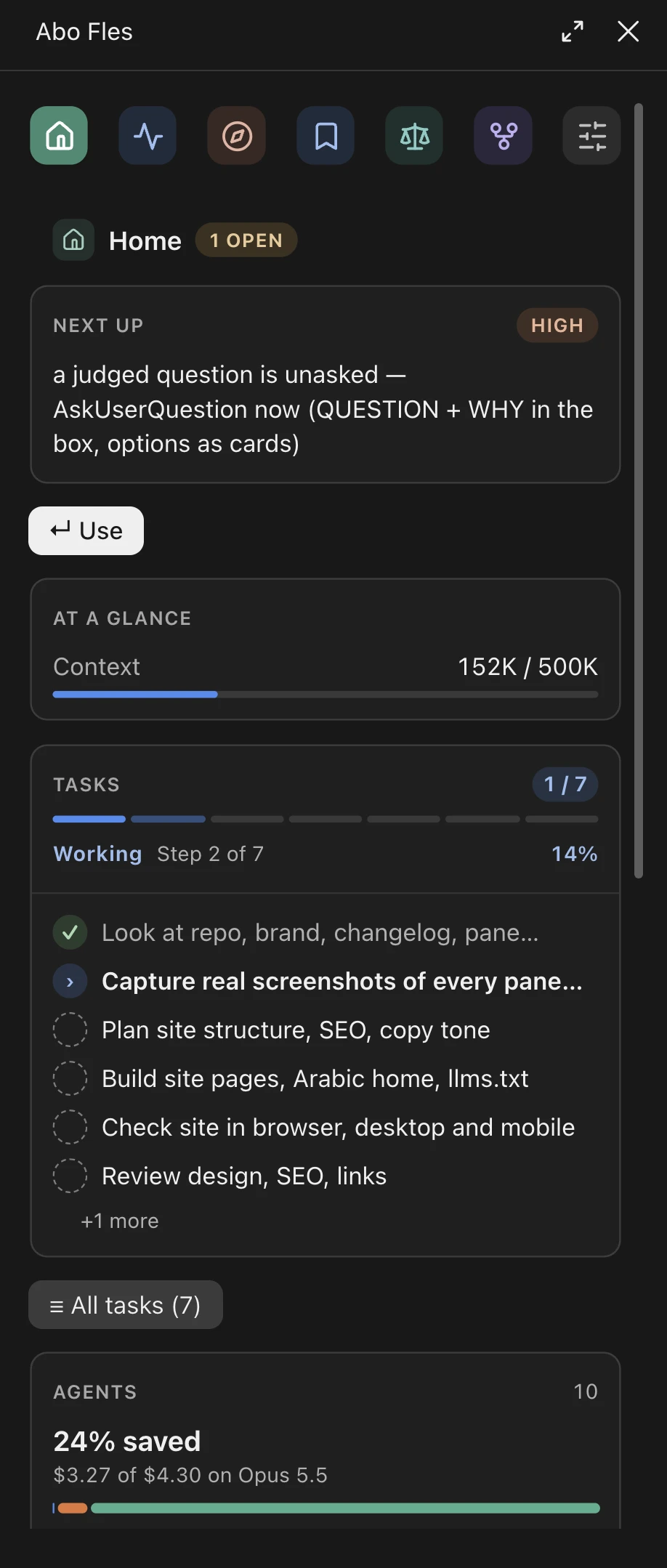
Run your main session on Opus · High and every agent it starts does too — the one that writes your payment code, and the one that just looks for a file. The uncle sorts them.
Same price for a grep and a ledger change. No reviewer on the money. No receipt, so nobody knows.
Cheap where a mistake is cheap, careful where it costs money. The same 1M-token read: $0.03 on Haiku 5.5, $0.90 on Opus 5.5.
1,317 topics in 31 domains — from SQL migrations to TikTok ads. Each one knows how risky it is and who should check it. These are real lookups.
No new commands to learn. Type the task in Claude Code the way you already do.
One lookup finds the topic and its risk tier — 🟢 Minor to 🔴 Critical — and picks a model, effort and reply cap for each step: Read, Analyse, Plan, Work, Verify.
Hooks refuse any agent without a model and effort. At the end: agents, real tokens, real dollars, and what was saved.
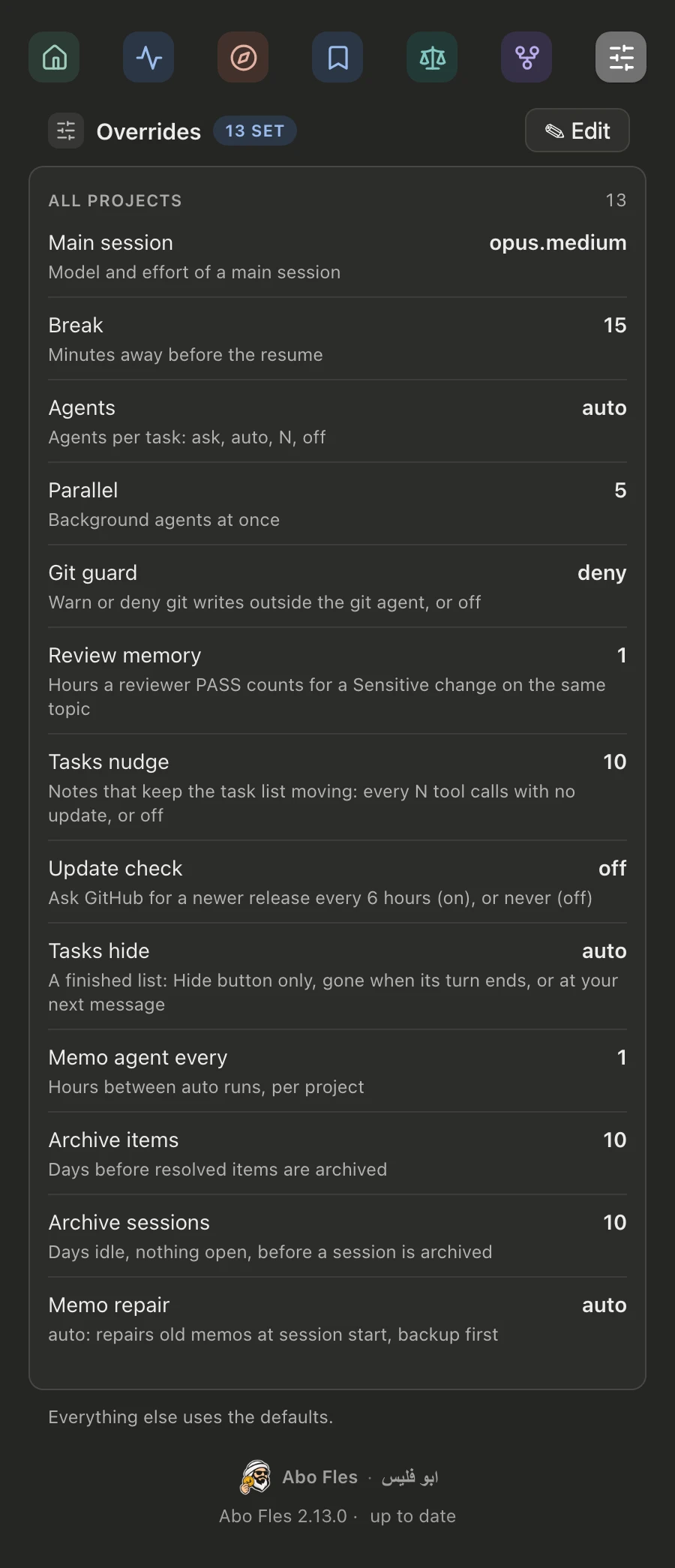
Strict about money, generous with checks. All of it on by default, all of it one line to change.
Every subagent gets a model and effort from a topic × side matrix. Opus writes, plans and analyses; Haiku and Sonnet read and verify. Fable only thinks.
“Opus to grep? Habibi, no.”
31 domains for code, design and marketing, each topic tiered by what a mistake costs. A one-call lookup — the model never reads the list.
Knows a little about everything. Like every uncle.
Every task that started agents ends with one: agents, real tokens, real dollars and the saving versus your main model. /abofles:bill for the whole session.
He asks for the receipt. Every. Single. Time.
Asks once per session how many agents a task may start, sized by tier. Caps background agents, so a session never runs ten without you knowing.
“Ten agents at once? Who's paying for this wedding?”
No question reaches you before a Judge tried to answer it from the code, tests, docs and tickets. If it's truly your call, you get plain words and a recommendation.
Don't bother the boss with what the code already says.
Security, Finance, Compliance, Tester, QA, UI/UX, Clean code, DBA, Ops, Perf, Data, Design, Marketing — picked by the topic, in parallel, after Verify passes.
Thirteen cousins with opinions. Useful ones, for once.
One agent owns every commit, merge, PR and tag. Force pushes, hard resets and history rewrites outside it get a warning — or a hard no.
“push --force? I hid the car keys.”
A small memo per project: now, next, what needs you. After a break or a /compact you get a short resume block, not a re-read of everything.
He remembers who owes what. Forever.
Warns at 500K, 600K … 950K tokens of context and stops the work once at your mark, so you compact at a task boundary, not mid-thought.
A full house costs more. He'll tell you when to tidy.
Checks every agent brief before it starts: header, files, a real “done when”. Flags risky asks — money, auth, prod — that name no file or end state.
A vague brief costs money. He sends it back.
Side sessions started from the desktop app get a model and effort by tier too — and a cap on how many stay open.
Even the kids get a budget.
Refines stories, splits epics, plans sprints and keeps tickets in step with the code in Jira, Linear, ClickUp and more. Writes only when you said so.
Runs the standup. Doesn't let it run long.
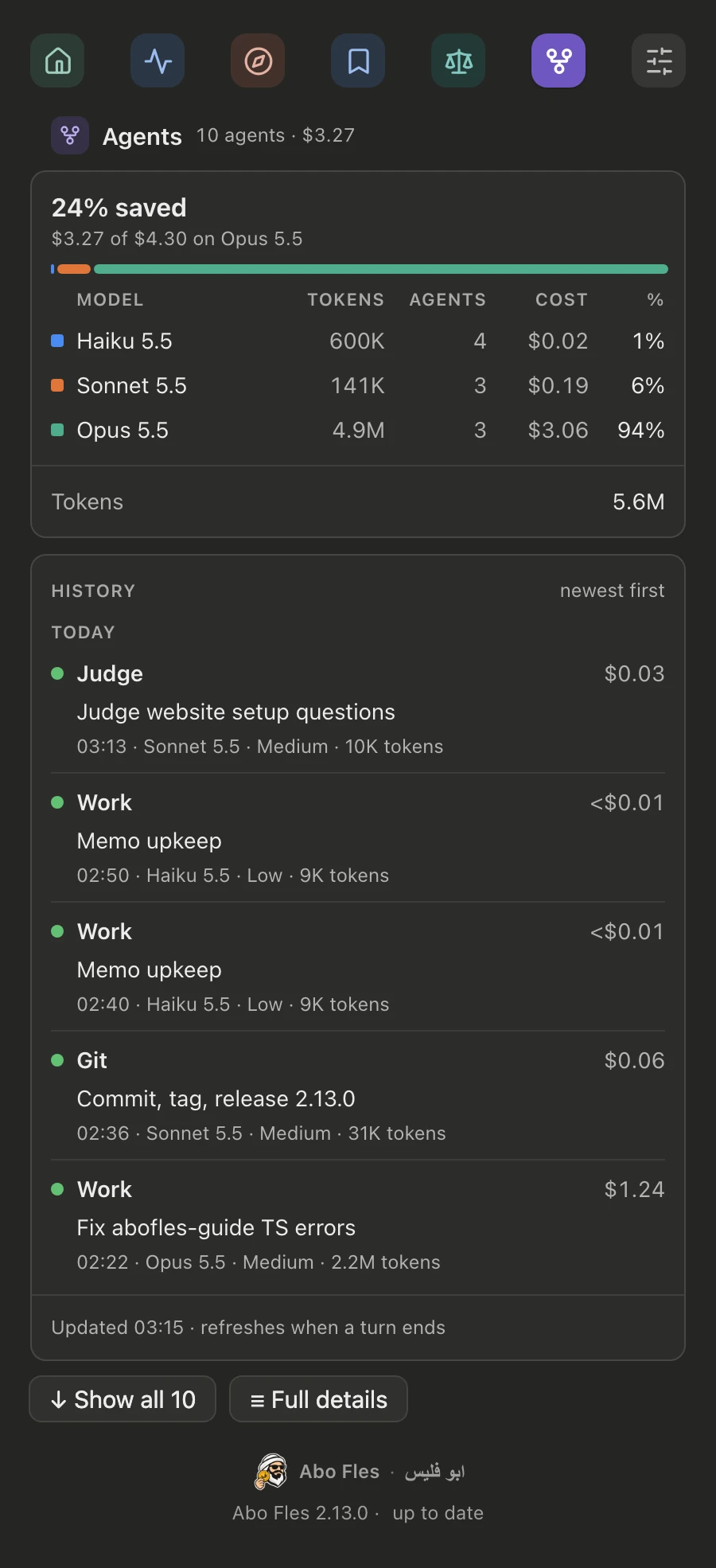
The hook reads each subagent's own transcript and prices every billed token at list prices. This is the actual receipt from shipping version 2.13.0 — the uncle shipped himself.
Where receipts live in the paneابو فليس
done → commit b7d4e46 on main, tags abofles--v2.13.0 and abofles-guide--v0.15.0, both GitHub releases up.
Thank you. Come again. Bring receipts.
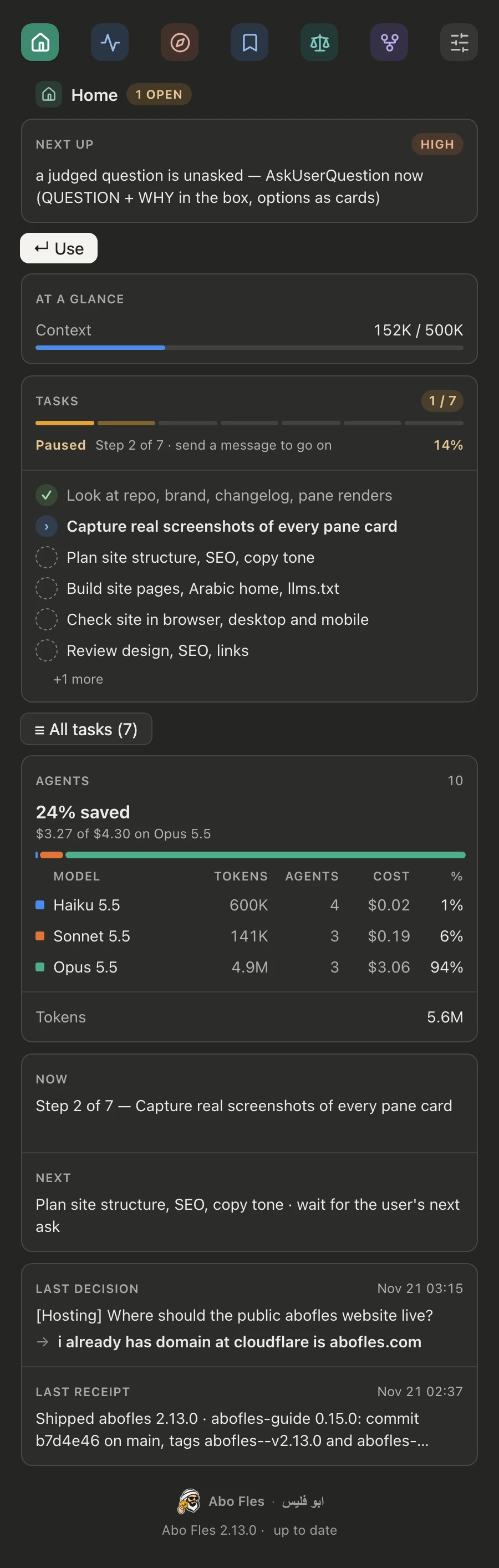
The optional abofles-guide mod adds a pane to the Claude desktop app: what to do next, what's running, where you left off, what every agent cost, and an editor for every setting. Real screens — nothing mocked.
Yes. Open source under MIT. No account, no sign-up, no “pro” tier. He'd never charge family.
No. With the default Matrix = quality, Opus writes, plans and analyses at every tier. Haiku and Sonnet only read and check. A FAIL or low confidence escalates one step at a time to a stronger setting.
No. The only network call is the optional update check: GitHub's public releases list, at most every 6 hours, none of your data. Update check = off turns it off. Ledgers and the memo stay on your machine.
Yes. Graphic design, video and motion, 3D and social and ads have their own topics and reviewers. It never posts, schedules or spends on its own — you press the button.
macOS, Linux and Windows (with Git Bash, which Claude Code uses there). It needs Python 3.8+ on the PATH. Without Python the hooks step aside and the skill still routes.
No. It's an independent open-source plugin for Claude Code, not made or endorsed by Anthropic.
In Iraqi slang, ابو فليس is the stingy uncle who counts every fils — a thousandth of a dinar. You know the one. This plugin counts every token.

Two lines in Claude Code. Free forever. He's already counting.
/plugin marketplace add Sajadh92/abofles/plugin install abofles@sajadh92